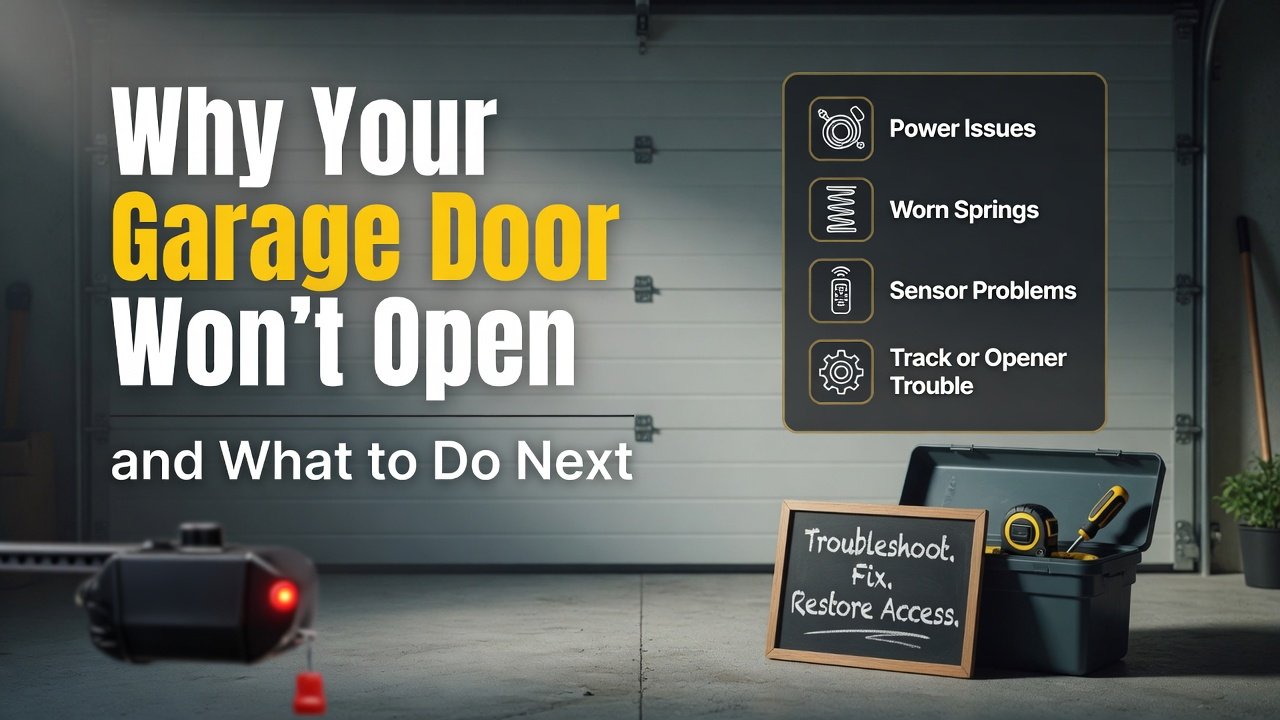
A garage door that refuses to open can disrupt your entire day, leaving your car trapped and your plans on hold. Whether you’re rushing to work or returning home after a long day, a malfunctioning garage door is more than just an inconvenience—it can also pose safety and security risks. Understanding the reasons behind a stuck garage door and knowing how to address the issue can save you time, money, and frustration. This guide covers the most common causes of garage door problems, practical troubleshooting steps, and when it’s time to call for professional help, ensuring your garage door operates smoothly and reliably.
What to Expect in This Guide
Common Causes of Garage Door Failure
Garage doors are complex systems with many moving parts, and several issues can prevent them from opening as they should. One of the most frequent culprits is a problem with the power source. If your garage door opener is not receiving power, it simply won’t function. This could be due to a tripped circuit breaker, a blown fuse, or even a disconnected power cord. Another common issue is with the remote control or wall switch. Dead batteries, signal interference, or faulty wiring can all prevent the opener from receiving the command to open the door. Additionally, physical obstructions in the door’s path, such as debris or ice buildup, can trigger the safety sensors and stop the door from moving. Mechanical failures, such as broken springs or cables, can also render the door inoperable. These components bear the weight of the door and are subject to wear and tear over time. When they fail, the door may become too heavy for the opener to lift, or it may become misaligned and jammed in the tracks. Regular maintenance and inspection can help catch these issues early, but even well-maintained doors can experience unexpected problems.
Troubleshooting Your Garage Door
When your garage door won’t open, the first step is to determine whether the problem lies with the opener, the door itself, or the power supply. Start by checking if the opener is plugged in and if the outlet is functioning. If the opener has power but the door still won’t move, try using the wall switch and the remote control separately to see if either works. If neither works, the issue may be with the opener’s internal circuitry or the safety sensors. Inspect the sensors near the bottom of the door tracks to ensure they are clean, aligned, and free of obstructions. Misaligned or dirty sensors can prevent the door from operating for safety reasons. If the opener runs but the door doesn’t move, disconnect the opener using the manual release cord and try lifting the door by hand. If the door is difficult to lift or feels unusually heavy, the springs or cables may be broken. In such cases, it’s important not to attempt repairs yourself, as these components are under high tension and can cause injury. For those in need of reliable service, Iowa-Based Garage Door Repair and Installation Experts With National Reach And Everyday Reliability can provide professional assistance to resolve even the most challenging garage door issues.
When to Call for Professional Help
While some garage door problems can be resolved with basic troubleshooting, others require the attention of a trained technician. If you notice frayed cables, broken springs, or hear loud grinding noises when attempting to operate the door, it’s time to seek professional help. Attempting to repair these components without the proper tools and knowledge can be dangerous. Additionally, if your garage door opener is more than a decade old or has recurring issues, a professional assessment can determine whether repair or replacement is the most cost-effective solution. Professionals can also inspect the door’s balance, alignment, and safety features to ensure everything is functioning correctly. Regular professional maintenance can extend the life of your garage door system and prevent unexpected breakdowns. If you’re unsure about the cause of the problem or how to fix it, don’t hesitate to contact a reputable garage door service provider in your area.
Preventing Future Garage Door Problems
Routine maintenance is key to keeping your garage door operating smoothly and avoiding unexpected failures. Lubricating moving parts such as rollers, hinges, and springs can reduce friction and wear, while regular inspections can catch minor issues before they become major problems. Testing the door’s balance and safety features, such as the auto-reverse mechanism, ensures that the system remains safe for your family and pets. Keeping the tracks clean and free of debris also helps prevent jams and misalignment. By investing a little time in preventive care, you can avoid the inconvenience and expense of emergency repairs.
The Importance of Safety Features
Modern garage doors are equipped with safety features designed to protect you and your property. The auto-reverse mechanism, for example, causes the door to reverse direction if it encounters an obstruction while closing. Photoelectric sensors, located near the floor on either side of the door, detect objects in the door’s path and prevent it from closing on them. These features are essential for preventing accidents and injuries, especially in homes with children or pets. Regularly testing and maintaining these safety systems ensures they function properly when needed most.
Quick Tips for Immediate Relief
If your garage door won’t open and you need to get your car out quickly, try using the manual release cord to disengage the opener and lift the door by hand. Make sure the door is fully closed before re-engaging the opener to avoid damaging the system. If the door is too heavy or stuck, do not force it, as this could cause further damage or injury. In urgent situations, contacting a local garage door service provider can help you regain access to your garage safely and efficiently.
Conclusion
A garage door that refuses to open can be a major inconvenience, but understanding the common causes and knowing how to troubleshoot the problem can help you resolve the issue quickly. Regular maintenance, prompt attention to warning signs, and the use of safety features all contribute to a reliable and long-lasting garage door system. While some problems can be fixed with simple steps, others require professional intervention to ensure safety and proper operation. By staying proactive and informed, you can keep your garage door functioning smoothly and avoid unexpected disruptions to your daily routine.
About the Author